


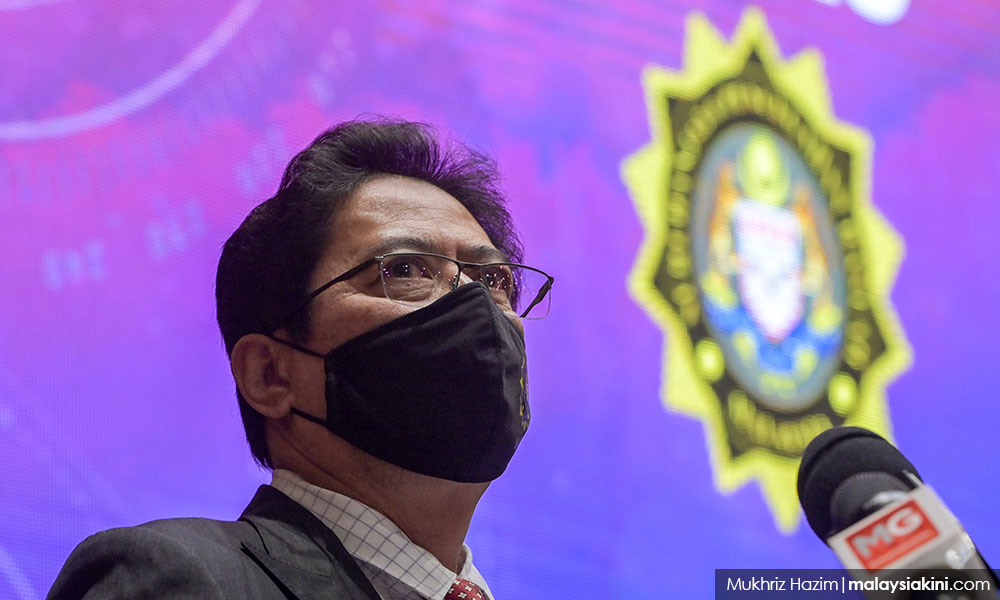

Azam: I am answerable only to advisory board
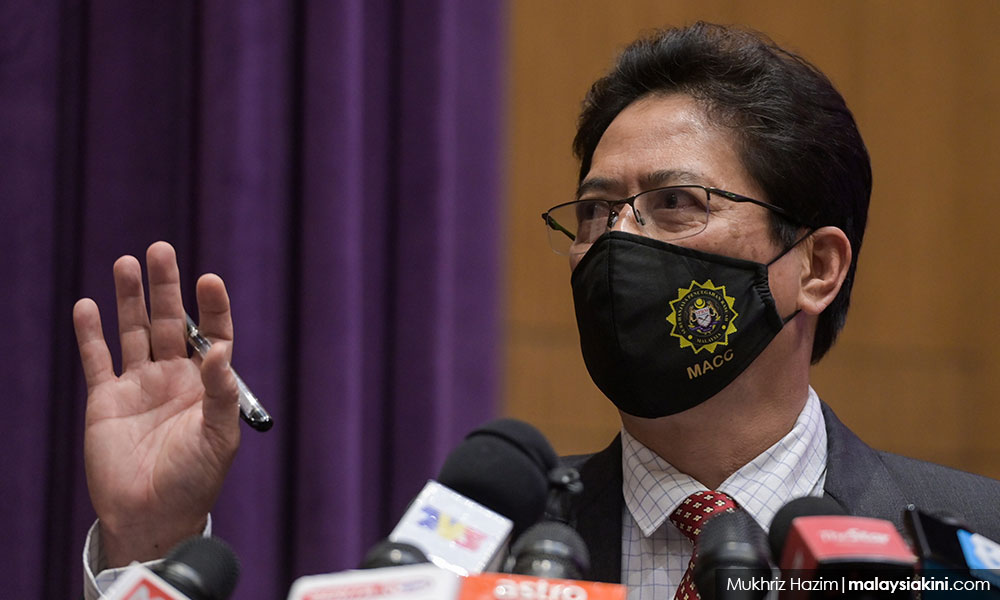
MACC chief Azam Baki said he did not immediately respond to allegations on his shareholdings because he believed he did nothing wrong.
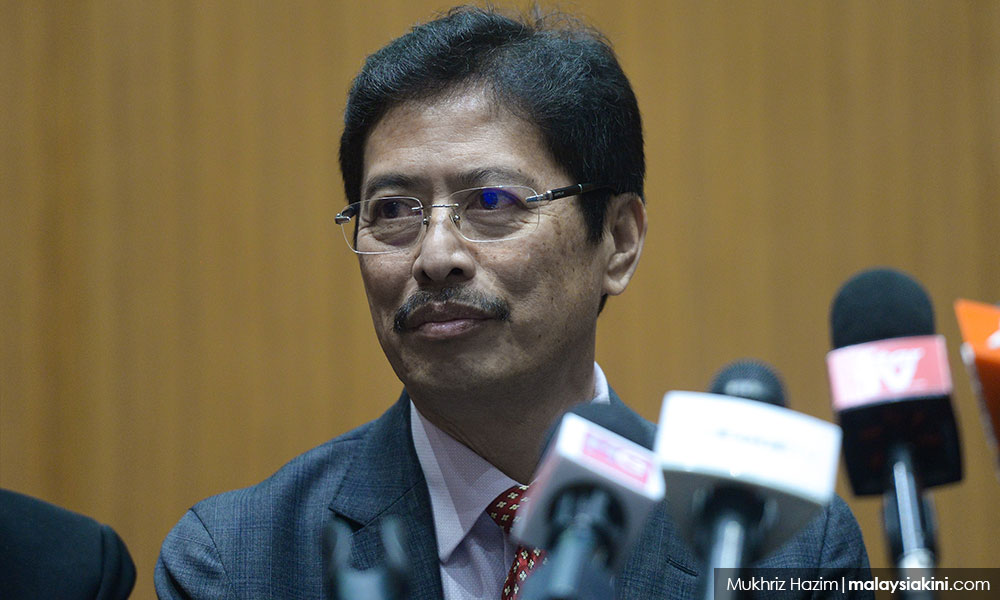
Speaking briefly at a press conference this afternoon, the top graft buster said he is answerable only to the MACC Corruption Prevention Advisory Board, also known as LPPR, and had given his explanation about the issue to them.
"I did not respond (to the allegation) in public because I did not do anything wrong," he said in answering a journalist's question on why it took him some time to openly address the issue.
MACC chief Azam Baki said he did not immediately respond to allegations on his shareholdings because he believed he did nothing wrong.
Speaking briefly at a press conference this afternoon, the top graft buster said he is answerable only to the MACC Corruption Prevention Advisory Board, also known as LPPR, and had given his explanation about the issue to them.
"I did not respond (to the allegations) in public because I did not do anything wrong," he said in answering a journalist's question on why it took him some time to openly address the issue.
"Like what I have explained to the advisory board, the shares were bought by my brother who borrowed my name.
"When I was called to explain about the matter, I appeared before the advisory board and provided them with details. I am only answerable to LPPR," he said.
Azam was called to address the media by LPPR chairperson Abu Zahar Ujang, who had held another press conference earlier on the same issue.
No conflict of interest
The MACC chief commissioner also denied claims that the shares bought using his name had caused a conflict of interest.
"The shares were purchased through the open market, and (the company) did not have anything to do with any investigation by the MACC.
"And all the shares were later transferred back to him (my brother)."

When pressed further why he let his brother use his name to buy the shares, Azam said he did not see it as an issue.
He also challenged his critics to prove that such doing was an offence.
"I will just give a brief answer to this. I did not see it as an issue, so I let him (buy the shares using my name).
"Anyone can use an account to buy shares in the open market. Tell me if that is an offence," Azam said.
Azam came under scrutiny recently after allegations surfaced about him having owned shares in two companies back in 2015.
According to Excel Force Bhd's 2015 annual report, Azam owned 2,156,000 warrants in the company as of March 21, 2016. At the time, Azam was the head of MACC's investigation division.
Azam said he had also briefed his superior in then MACC back then about his brother acquiring shares on his name.
This was done on his own initiative despite not having to do so, Azam added.
He did not name who was the superior he had furnished the information to, but as the director of investigation, Azam was answerable to the then MACC chief commissioner and deputy chief commissioner.
Out to tarnish reputation
Azam said he believed that there are certain quarters who were out to tarnish his name and his office, and did not discount the possibility that they include those who were not satisfied with the MACC doing their job busting corruption.
This, he said, was an attempt by certain interested parties who wants to erode the people's trust in the MACC.
"I believe this is part of the challenges that all MACC chiefs must face.
"I give my assurance that I will continue to carry out my duties and responsibilities to bring the MACC towards being an agency that is credible, integrity and professional in all its actions," he said.
Azam said he has also received legal advice and has decided to pursue legal action against those who tarnished his reputation.
Last month, Sungai Buloh MP R Sivarasa had filed an urgent motion seeking the Dewan Rakyat to discuss Azam's alleged ownership of close to two million shares in a public listed company.
According to him, civil servants were not allowed to own shares of more than RM100,000 in value in any company, and they are also required to declare all the assets to their superior.
"Section 23 of Service Circular 3/2002 prevents a public servant from owning more than RM100,000 value of shares in any company.
"Section 10 of the Public Officers (Conduct and Discipline) Regulations 1993 also requires public officers to declare all their assets to their heads of department," Sivarasa had said.
The issue also saw a member of the MACC’s Consultation and Corruption Prevention Panel resign in protest last month.
Edmund Terence Gomez claimed that the panel did not take action despite being called to convene a meeting to discuss the issue.




Report this comment
Are you sure you want to delete this comment?
This action cannot be undone.